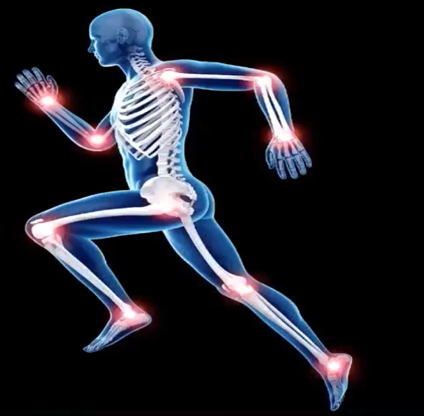
Focus on the Musculo-Skeletal System and its components.
Manual Handling Injuries
Many injuries in the workplace are due to poor manual handling techniques.
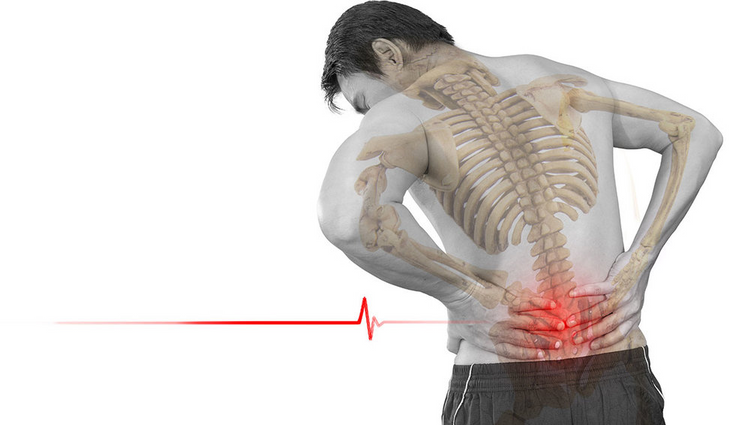
The majority of these injuries affect the back.
Hands, arms, neck and feet can be affected too.
Examples of injuries can be a cut, bruise or ligament/muscle strain.
The Spine
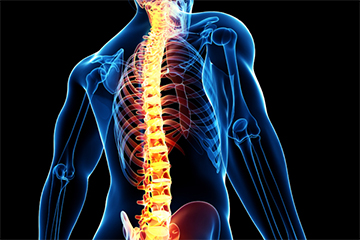
The spine is the body’s central support structure.
Keeps us upright and connects the different parts of our skeleton: head, chest, pelvis, shoulders, arms and legs.
It is made up of 33 interlocking bones called vertebrae with intervertebral discs.
It is flexible due to elastic ligaments and spinal discs.
The vertebrae sit on top of each other and form a slight curve in the shape of the letter ‘S’.
The spine can take significant downward pressure (up to 1 ton weight) but once it out of its correct alignment, it has no strength.
Discs
Discs absorb fluid when we lie down removing pressure from the spine.
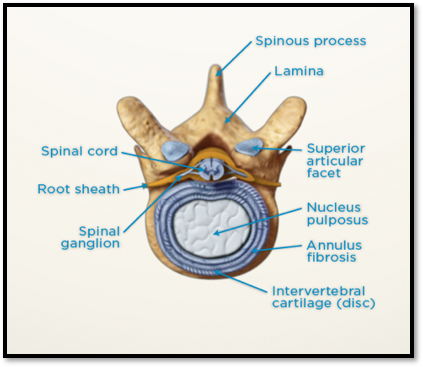
Discs are made up of Annulus (rubbery) and Nucleus (like toothpaste).
Discs separate the vertebrae at the front of the spine (the weight bearing part of the spine).
Discs act as shock absorbers in the spine between each bony vertebrae.
Discs have poor blood and nerve supply. Which can disguise injury.
Disc Injuries
Repeated stresses can cause minute tears and bulging of the disc.
A bulging disc can press on nerves/ligaments causing pain.
A slipped disc is a bulging disc caused by weakening of the Annulus due to uneven pressure i.e. when we bend or stoop when lifting. A slipped disc is sometimes called a herniated disc.
The Annulus can split allowing the nucleus to protrude and push on the nerve - this is called sciatica.
Ageing causes fluid loss from the nucleus and the disc will slowly become gristly and slightly thinner over time.
A disc can collapse (prolapse) suddenly if too much pressure is applied in a twisting fashion.
Excessive stooping of the spine is like applying pressure to a tomato in a twisting fashion
Disc Damage
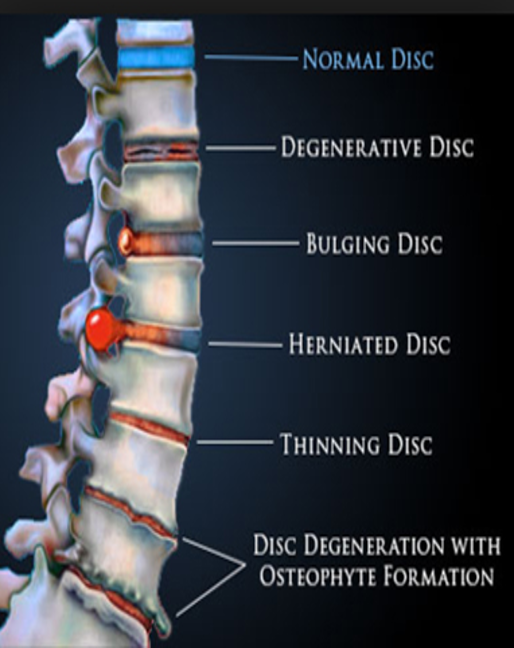
Diagram below shows the progression of disc injuries.
The thinning of discs can also lead to arthritis as vertebrae rub off each other.
Muscles
Muscles facilitate movement but can be injured or strained.
They are bundles of fibres with good blood and nerve supply.
Good blood and nerve supply means you are more aware of doing damage.
Muscles do not like to be continuously contracted.
Muscles Types
Voluntary muscles are action muscles and facilitate movement. They tend to tire faster. They can strain when overstretched. Examples include biceps and triceps.
Involuntary muscles contract without conscious control and are found in walls of internal organs such as stomach & intestine and also in the back.
Postural muscles are involuntary muscles that support the back. If they weaken they offer less support to the back.
Aches and pains in postural muscles come from poor posture as they over stretch.
Examples of Responses
Voluntary Actions
Eating a cake
Riding a bicycle
Walking
Playing the piano
Going to work
Involuntary Actions
Your heartbeat
Brething
Blinking
Removing hand from hot object
Choking
Ligaments & Tendons
Made up of strong fibrous tissues with poor blood supply which means they take longer to heal. They can sprain or suffer whiplash or repetitive strain injury.
Ligaments - Hold Bones together at joints. Examples include cruciate ligament. They have a small degree of elasticity but can weaken if over-stretched – making the back less stable.
Tendons - Attach muscles to bones. Example -Achilles tendon. Overstretching can cause local pain and could snap.
The Spinal Cord (Nerves)
Nerves transmit information to and from the brain.
The spinal cord runs from the base of the brain about 2/3rds of the way down the spine.
The spinal cord nerves are light delicate fibres that branch out through small gaps between the vertebrae and connect with nerves throughout the whole body.
Any tissue that presses on a nerve can cause pain like an inflamed muscle or a herniated disc.
A nerve that is touched by a bulging disc can cause sciatica.
How is the Back Injured?
The back can be injured by just one incident or more. Usually it is the consequence of cumulative misuse.
‘Cumulative misuse’ describes repeated movements or poor postures whilst carrying out manual handling tasks which, over time can cause injury to your back.
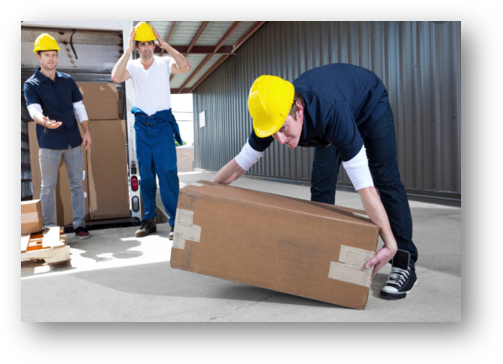
Constantly bending and twisting your back whilst lifting, places strain on the back that can result in an injury.
Examples of Cumulative Misuse
Poor handling technique: Twisting while lifting places your back, arms and neck under pressure.
Task repetition: A repeated task like sorting or packaging puts repeated strain on the same muscles increasing risk of injury.
Lifestyle habits: Being overweight places more strain on weight carrying joints and increases the rate of wear and tear. Muscles and joints that are exercised, stay strong and are better able to cope with manual handling tasks.
Poor posture: Increases the strain on your back and neck. Continual bad posture can cause back pain in the long term. Your back muscles support your spine, so maintaining a good posture can reduce the likelihood of problems occurring.
Biomechanics
Biomechanics is the study of forces acting on the body and how we can work with them to reduce strain.
The greatest of these forces is gravity. The centre of gravity is at the mid-point of the space occupied by a person or object. The line of gravity runs downwards to the floor.
If a load is held at arms length – away from the centre of gravity, this puts a lot of pressure on the back and arms.
By having a broad base you can reduce the pressure on the back.
Weight transfer is the force generated when you shift weight from one foot to the other. You need to assess risk when this occurs.
Summary
The back is made up of nerves (the spinal cord), bones (vertebrae) and supporting muscles, ligaments and tendons.
Back problems are usually the result of cumulative misuse, but sometimes, can be injured in a once-off incident.
Some examples of cumulative misuse are poor handling techniques, an inactive lifestyle, task repetition and poor posture.
If an object is too heavy, ask a colleague to help you. Please watch the video below.